The Laramie Project
By Moisés Kaufman and the Members of Tectonic Theater Project
UC Davis Department of Theatre and Dance · Wright Hall Main Stage · February 22 – March 2, 2024
This production found me through my longtime collaborator Julian Stetkevych, an actor and professor at UC Davis who recommended me to the department chair when she went looking for a queer director well suited to the material. I interviewed, and my history as a former member of the literary department of Tectonic Theater Project — and my relationship with Moisés Kaufman — made me an immediate fit.
That connection to Tectonic shaped everything about how I approached the work. I spoke closely with Moisés's husband about the original intentions of the piece, understanding what the company had set out to make when they first traveled to Laramie, Wyoming in the aftermath of Matthew Shepard's murder. I also invited Mercedes Herrero — an original cast member of the production who I had known since my early days in New York — to speak with our company via Zoom. Having someone who had lived inside the original creation speak directly to these young actors was invaluable.
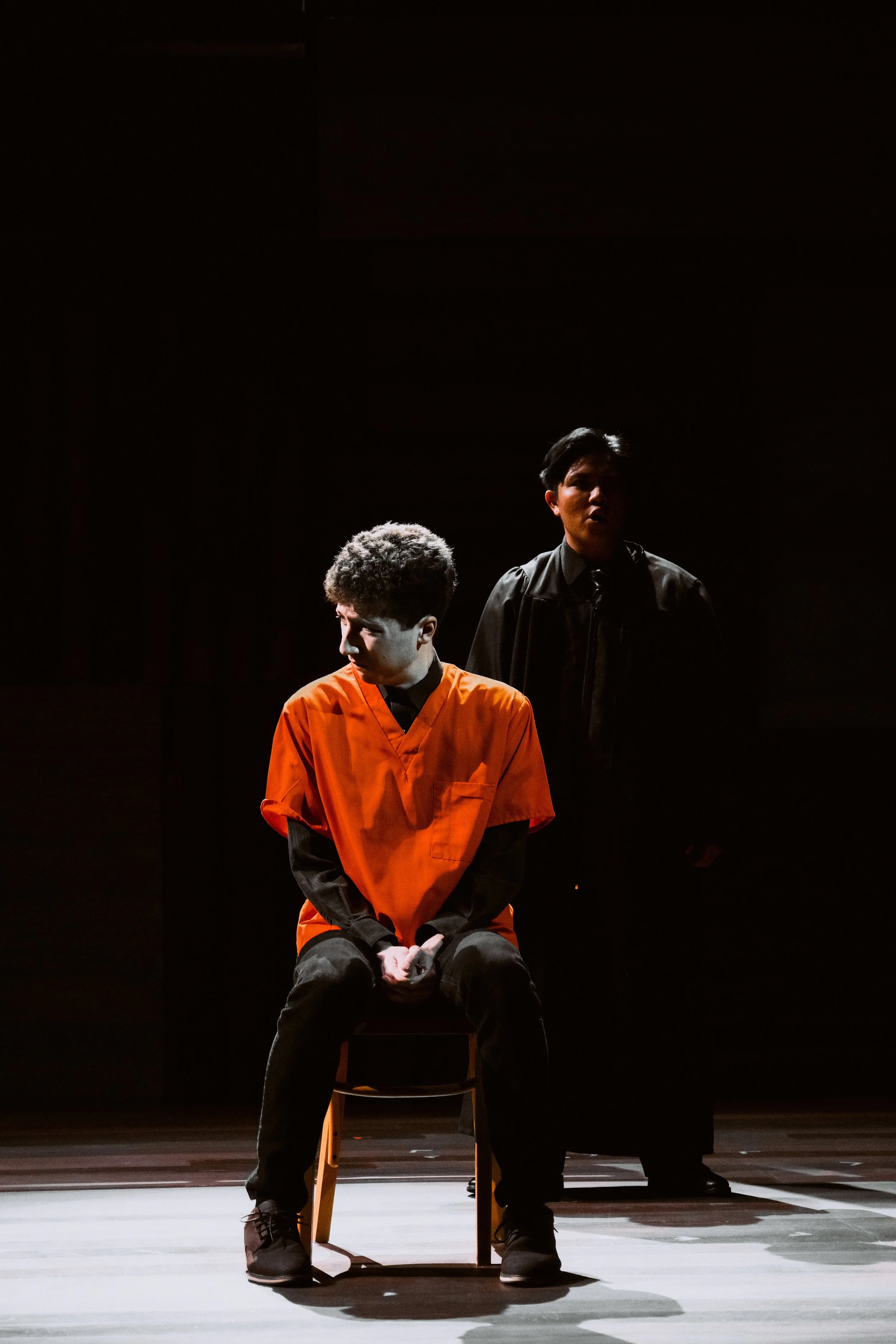
The cast were undergraduate acting minors at all different levels of their training. The Laramie Project makes extraordinary demands — most of the time the actors are speaking to people who don't appear on stage, and it is entirely their performance that brings those absent voices to life. About a week into rehearsal I made a decision: we stopped. We put the script down and spent time studying Practical Aesthetics — the acting technique taught at UC Davis and, as it happens, the same technique I was trained in — alongside a Viewpoints intensive. We needed a shared language and a shared instrument before we could tell this story properly.
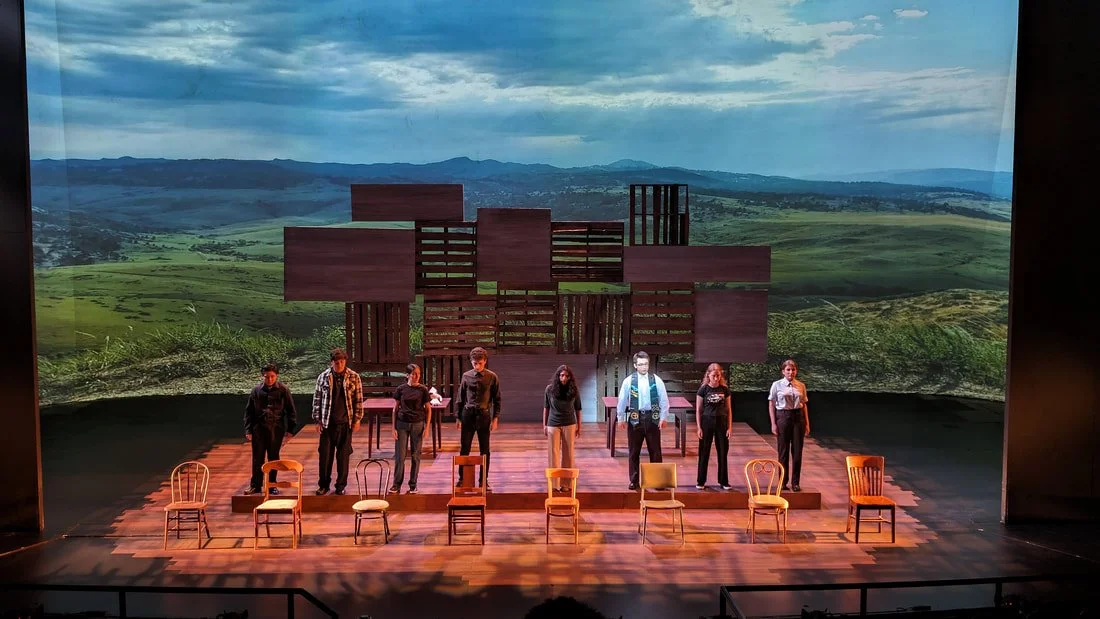
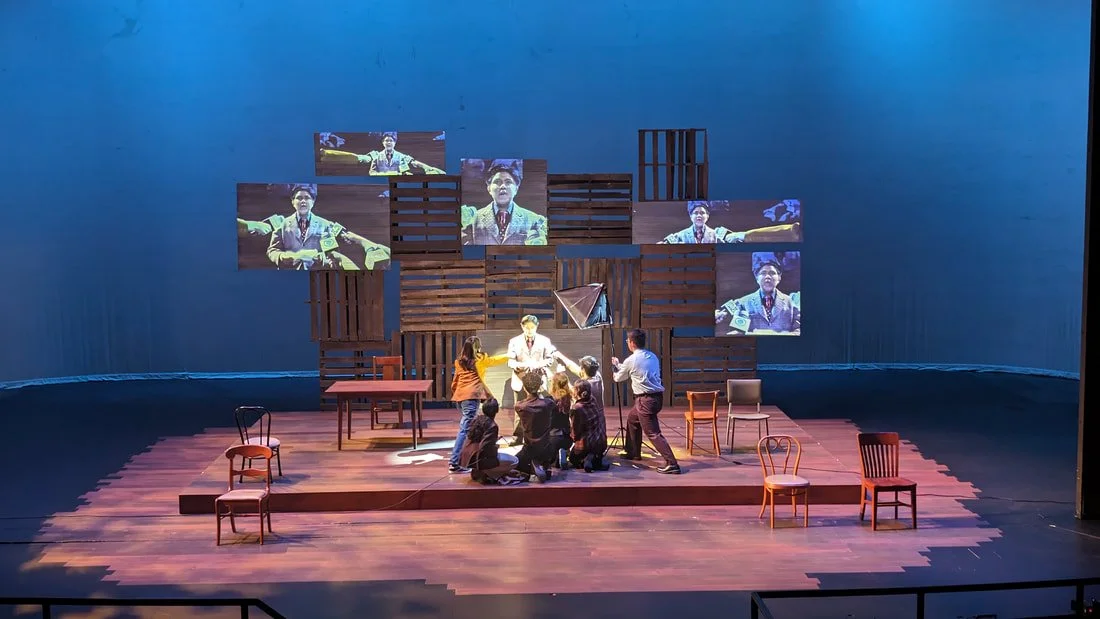
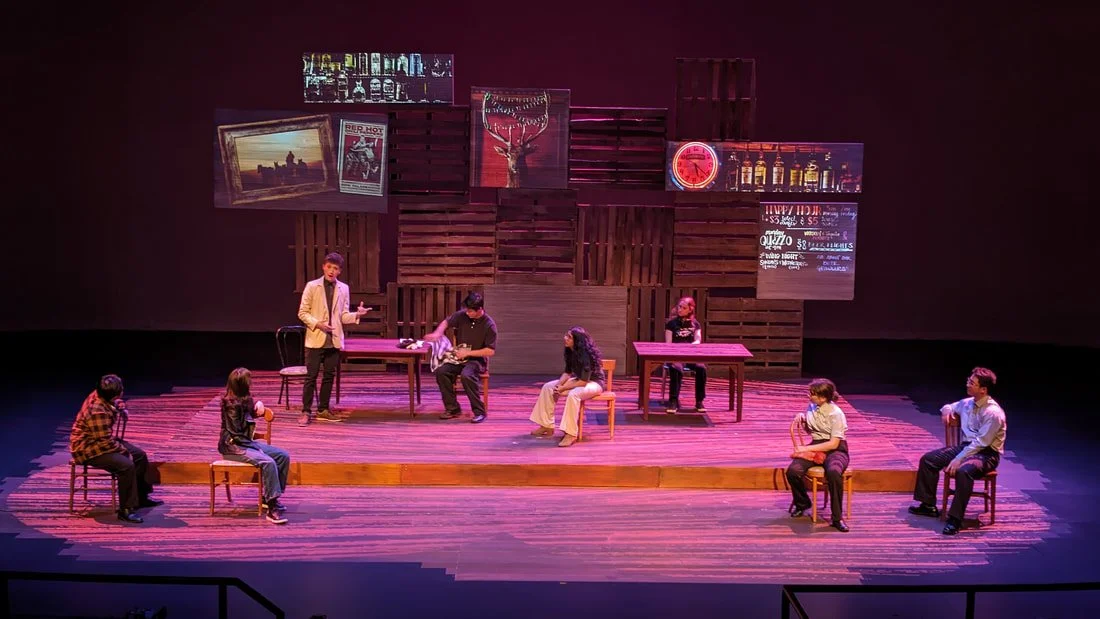
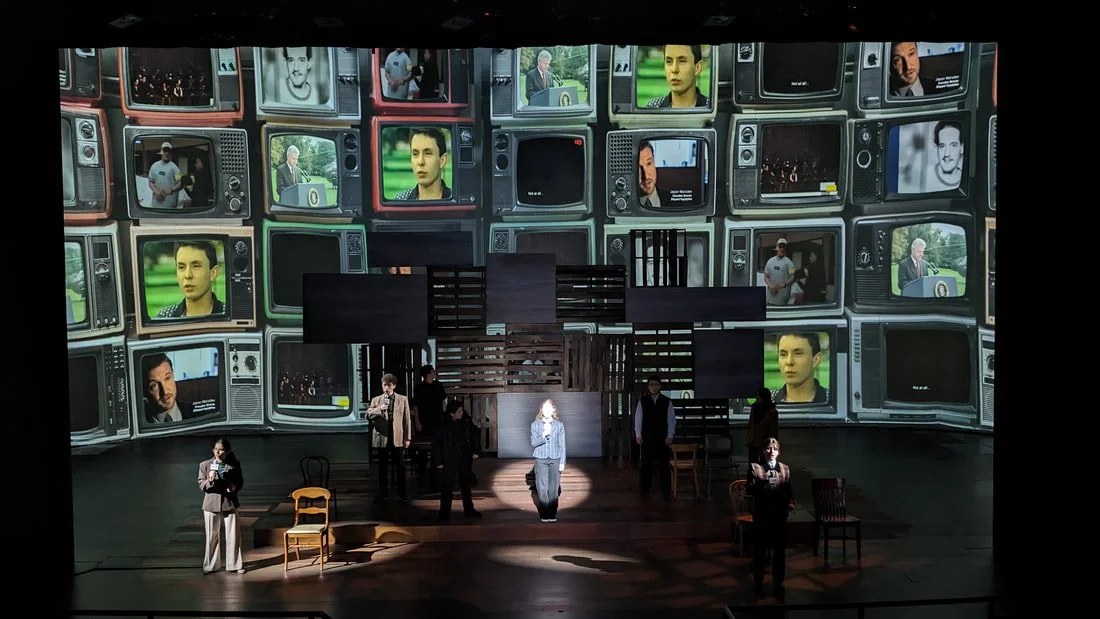
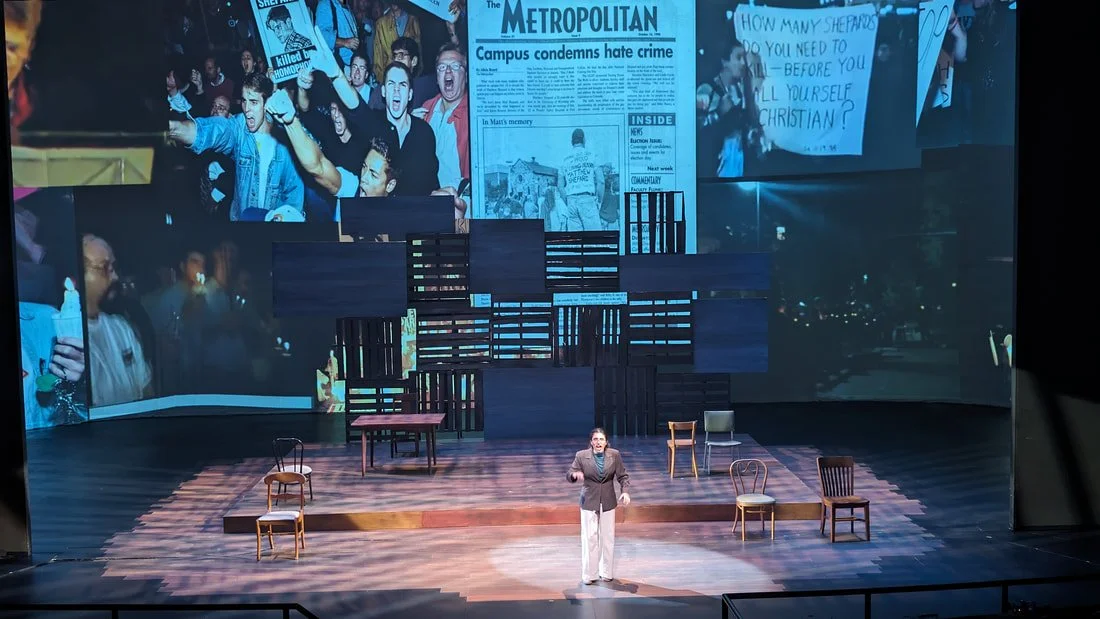
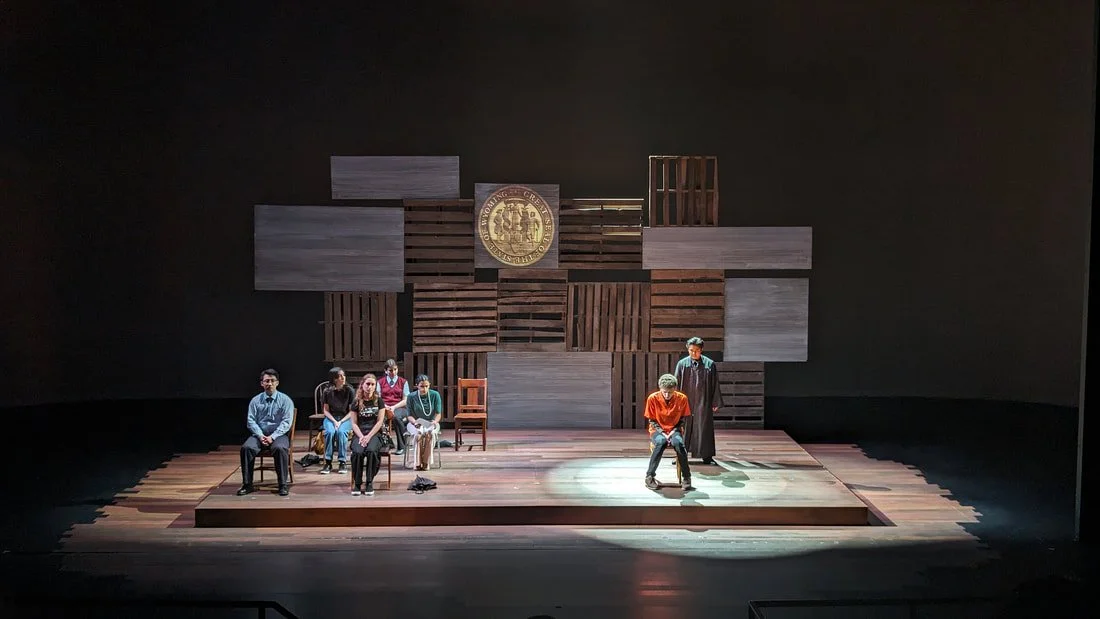
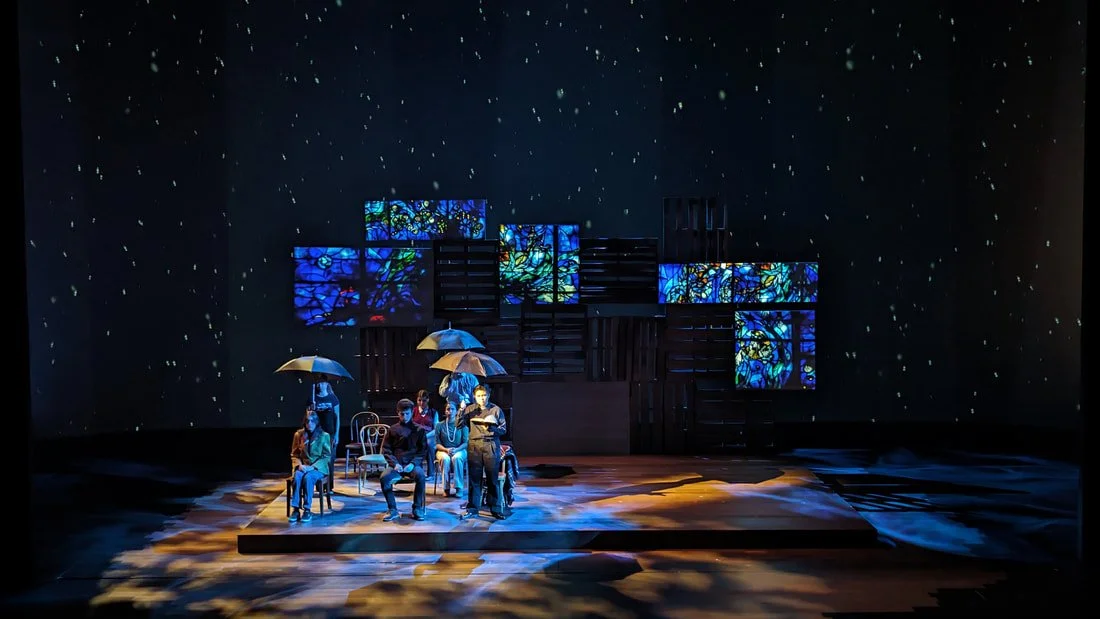
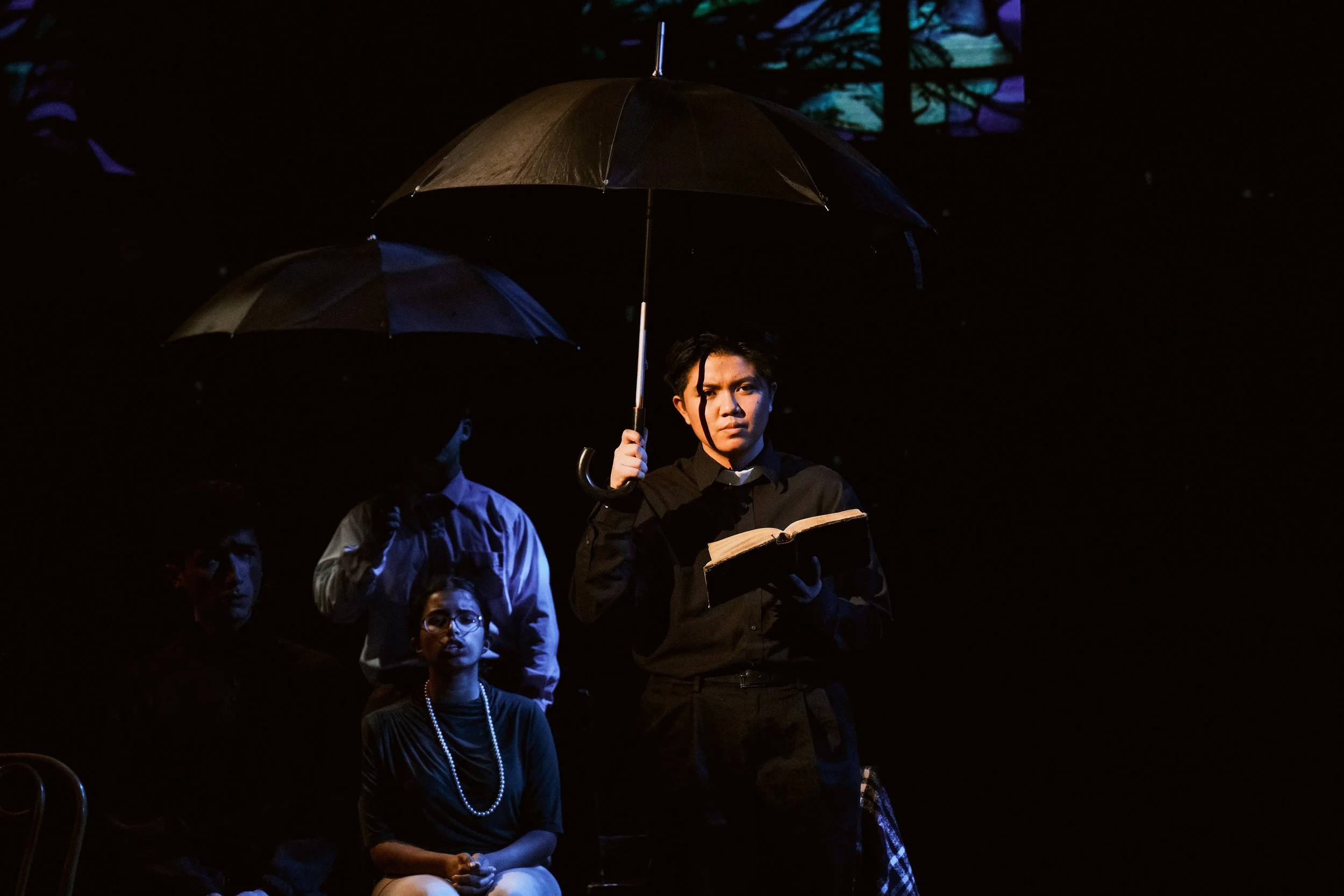
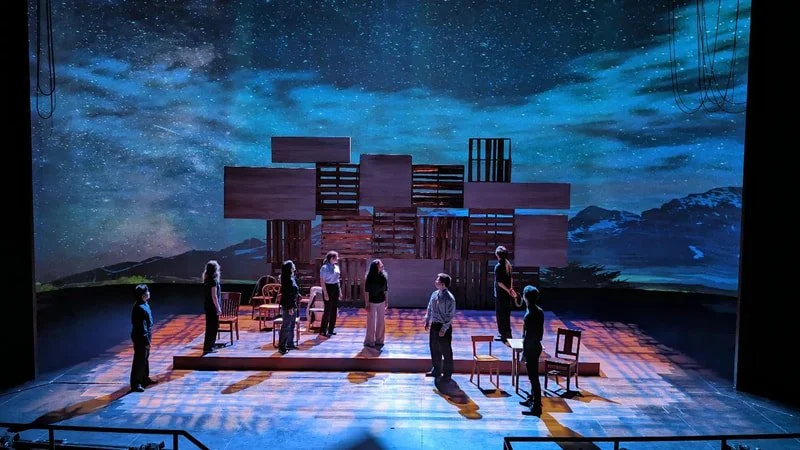
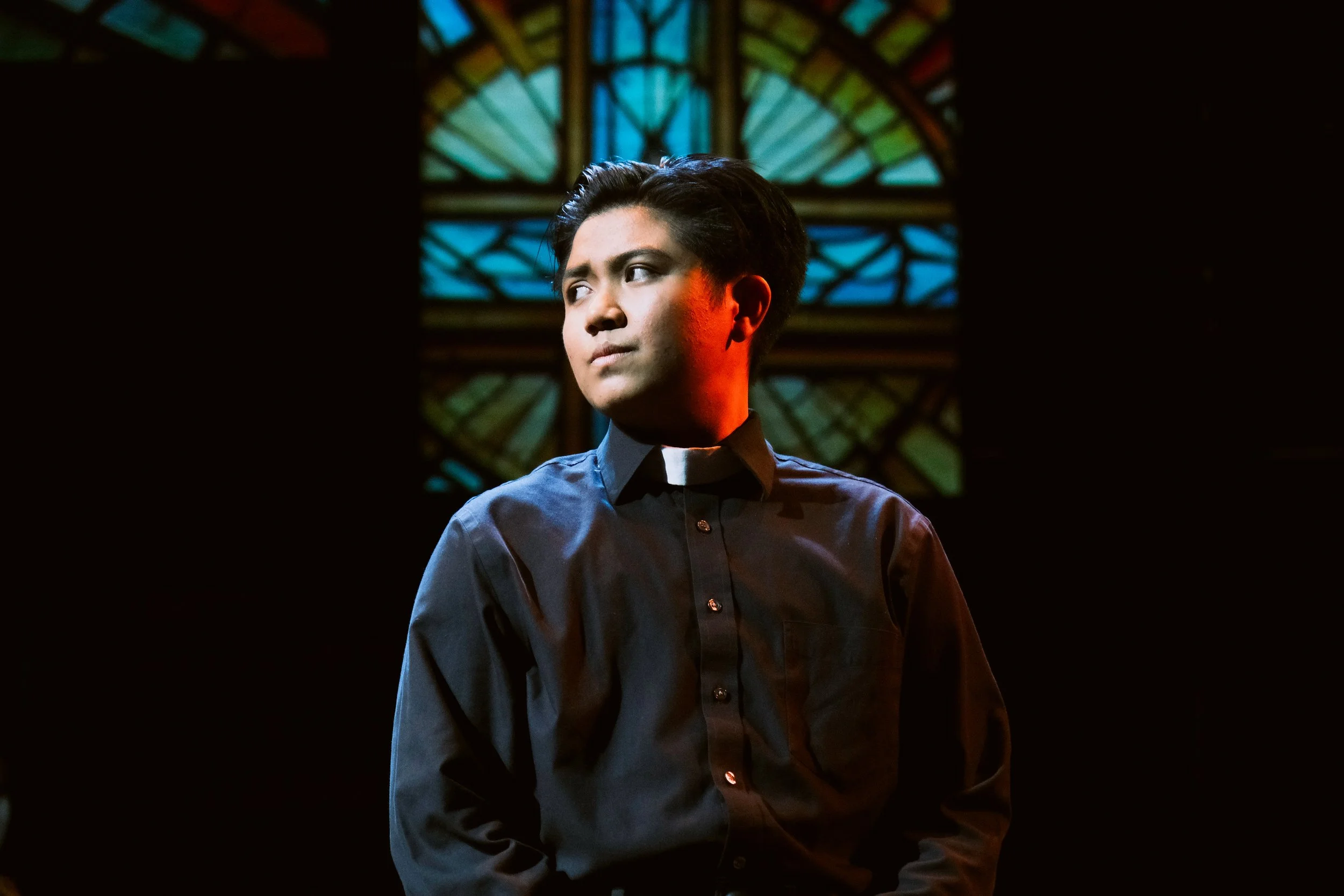
The theatre at UC Davis is vast. The department had been gifted a huge wrap-around cyclorama by the San Francisco Opera — an extraordinary scenic resource. We built an intimate, rustic playing area at the center of the performance space, grounded and human in scale. But behind and around the actors, we could project whole worlds. For most of the production we filled that cyclorama with the landscapes and skies of Laramie — the open Wyoming terrain that is as much a character in the play as any of the people who inhabit it. For the press conference scene, the world transformed: television screens appeared everywhere, and live feed from the stage itself was projected back into the space, the media's intrusion into the story made suddenly, uncomfortably visible.
Being so far from home, and working with these students every day, the company bonded quickly and deeply. I think they were surprised by how open I was — how genuinely interested I was in them as people, not just as actors in a production. That openness is part of how I always work. But in Laramie it felt especially important. This is a play about what happens when a community fails to truly see the people in its midst. The least I could do was see mine.
At its heart The Laramie Project is about a community — and about the responsibility of bearing witness so that a story is not forgotten. Working with a cast that was mostly queer, telling this story together felt like more than a production. It felt like an act of remembrance. Matthew Shepard's story deserves to be told with care, with specificity, and with love. I hope we did that.
-
Featuring Ananya Yogi, Ryley Sakai, Poe Angeles Dayao, Madeline Weissenberg, Daxi Jiang, Melaine Garcia, Arman Abbassi, and Mia Dunbar
Creative Team Direction — Scott Ebersold Scenic Design — Nicolette Gruber and Bhavi Patel Scenic Design Mentor — Ian Wallace Lighting & Projection Design — Ethan Holligner Costume Design — Angelina McClung Sound Design — Megan Kimura Stage Manager — Eli Thoron
Production UC Davis Department of Theatre and Dance · Wright Hall Main Stage · February 22 – March 2, 2024
Photos by Austin Wang, Ethan Holligner, and Jersain Medina