Baal
By Bertolt Brecht in a new adaptation by Peter Mellancamp
Columbia Stages · Schapiro Theatre · 2013
Baal was one of two productions I directed in my second year at Columbia, where I was studying with Anne Bogart. It was an unusual choice — and that was exactly why I chose it.
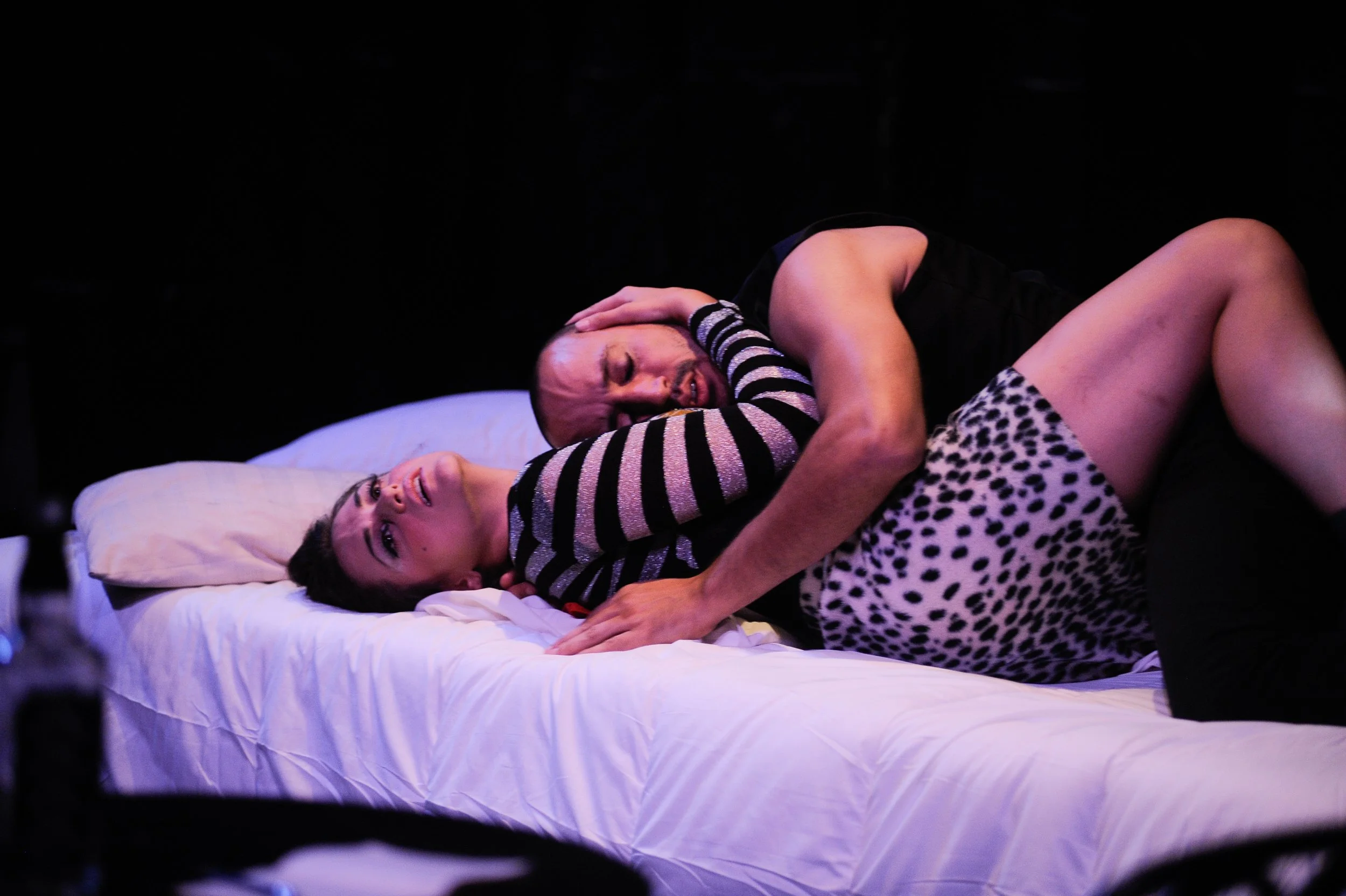
Most people encounter Brecht through the lens of his theory of the alienation effect. But Baal was written before any of that. It's an early, raw, dionysian work — a portrait of an amoral poet who consumes everyone around him, driven entirely by appetite and instinct. There was no distancing mechanism, no invitation to think rather than feel. It was pure id. That felt like a genuine discovery.
There was also something else that drew me in. At the heart of the play is Baal's relationship with his best friend — an intensity between two men that reads, unmistakably, as queer. It wasn't subtext so much as text that history had chosen not to name. I wanted to name it.
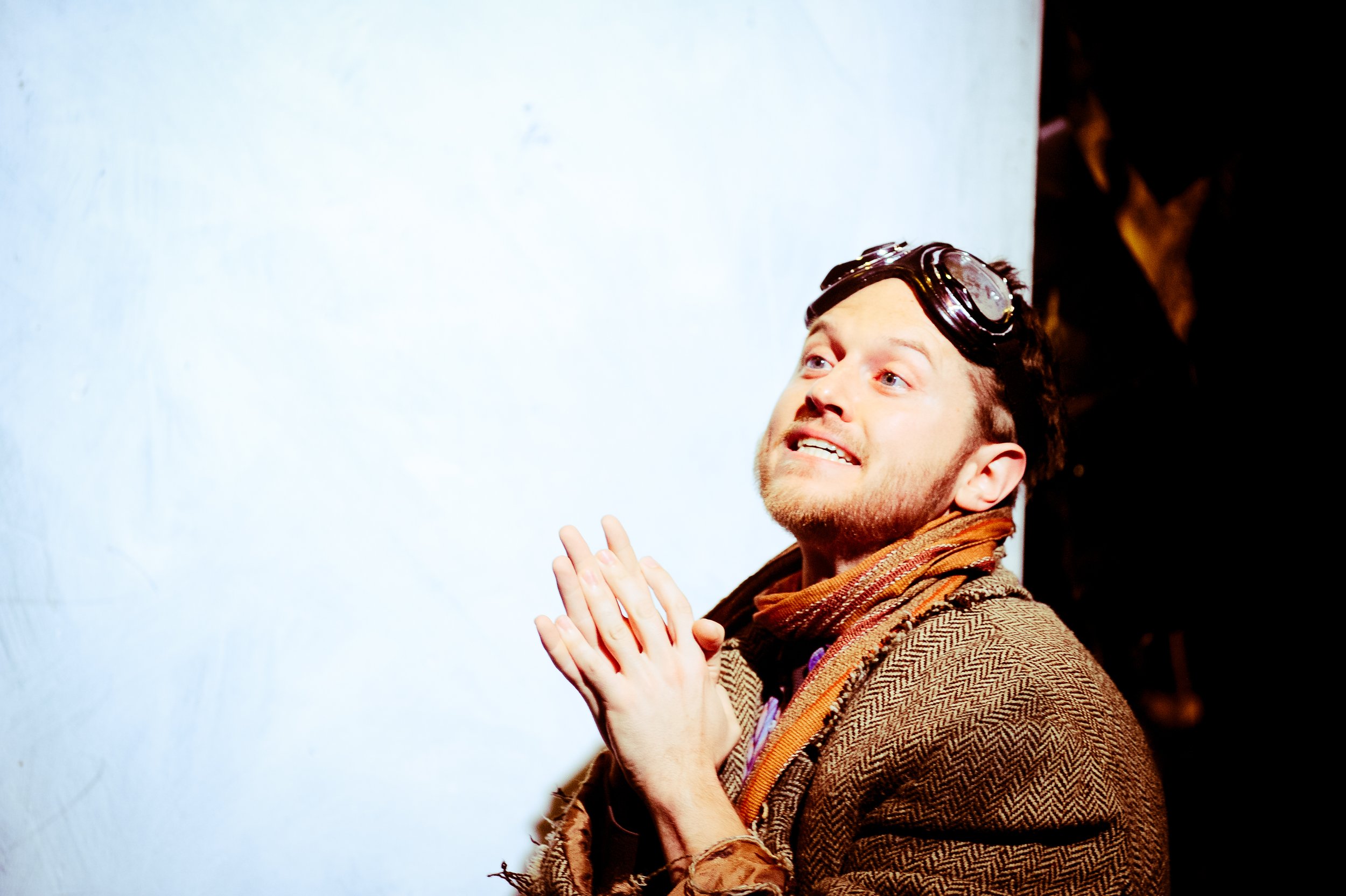
Anne had been pushing me toward work that was more dionysian — less controlled, more alive to chaos and pleasure. When I found Peter Mellancamp's new adaptation I knew immediately what the production wanted to be. Working with composer Andrea Bassett, we turned it into a 1970s rock-inspired bacchanal, heavily influenced by the legendary New York club Max's Kansas City — that electric intersection of art, music, and transgression where Warhol held court and glam rock was born.
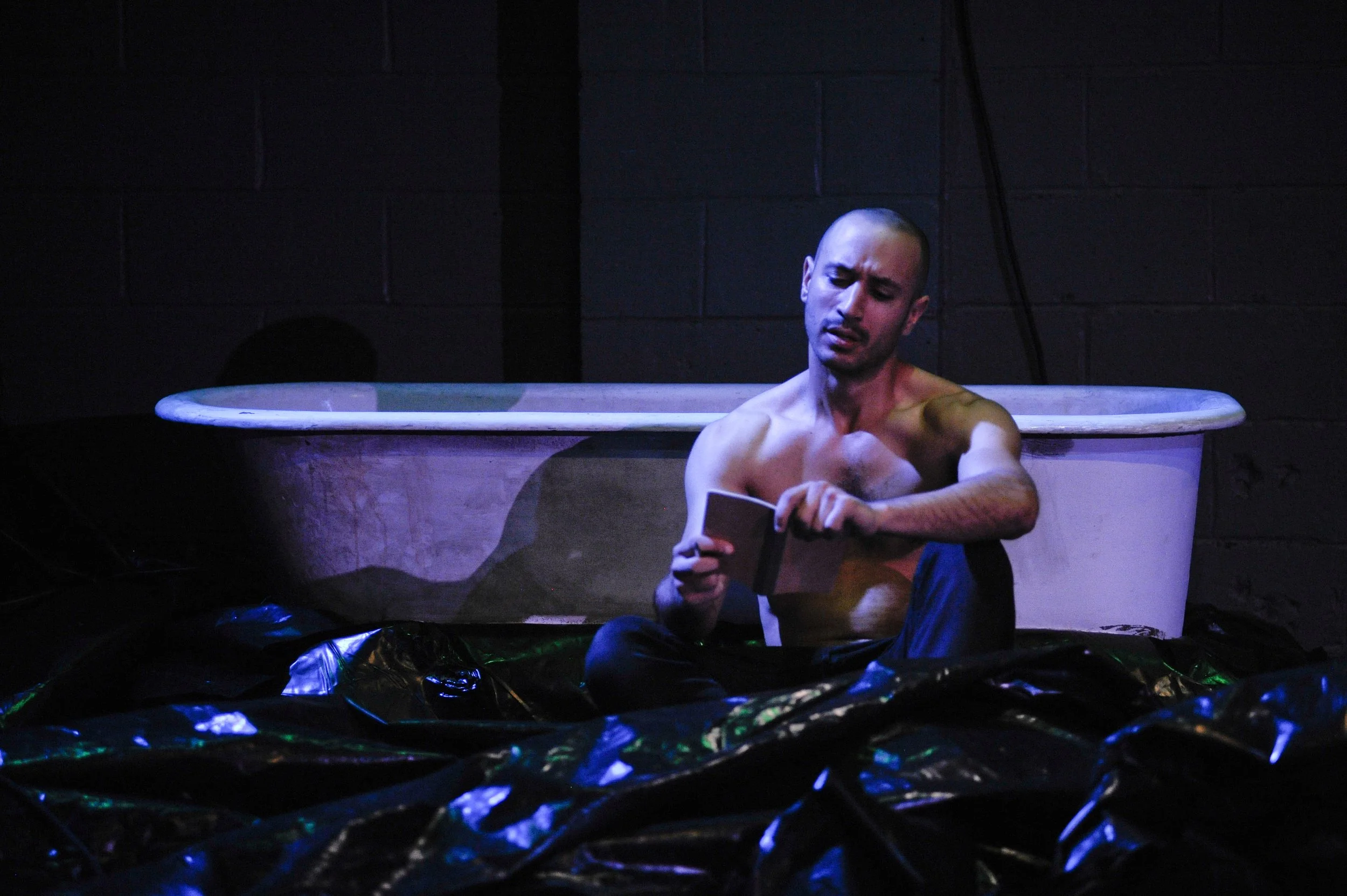
The design was everything. Working with designer Daniel Dabdoub — now known as DD Fuego on RuPaul's Drag Race — we transformed the performance space into a nightclub. Walls of black plastic hung from the grid, creating a room within the room. The audience entered into a party already in progress. Music, bodies, heat, darkness.
And then, as Baal's journey darkened and the world around him became bleaker, the plastic walls fell. All at once. Revealing a vast, empty space surrounding the audience on all sides — the wasteland Baal was travelling through. The audience had been inside the club with him. Now they were in the wilderness with him too.
That moment — the walls coming down — is one of the purest examples of something I care about deeply as a director: the way a space can tell the story that words cannot.
-
Cast & Creative Team
Featuring Drew Cortese* as Baal with Kristopher Dean, Patrick Harvey, Haley Houch, James Leighton*, Sevrin Ann Mason*, Daniela Mastropietro*, Cliff Miller, Kyle Nesbit, Romy Nordlinger*, Ariel Puls, and Erica Genereaux Smith
Creative Team Direction — Scott Ebersold Original Music — Alexandra Bassett Scenic Design — Daniel Dabdoub Lighting Design — Dan Stearns Costume Design — Nikki Moody Sound Design — Stephen Byrne Dramaturgy — Anika Chapin Produced by Martins Jukna
Photos by Matthew Dunnivan*Member of Actors' Equity Association